

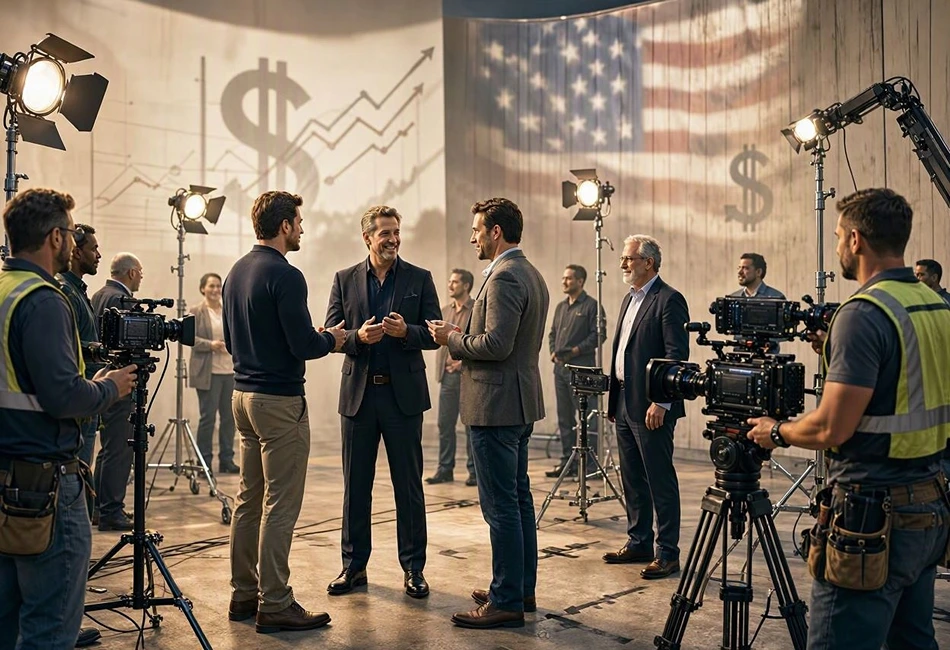
For years, a federal film incentive was something the industry talked about. As of last week, it is a bill, and the provisions that matter most to markets outside the major hubs are the ones stacked on top of the headline rate.
WHAT THE BILL DOES FOR U.S. FILM PRODUCTION
A bipartisan group of lawmakers introduced the Motion Picture, Television, and Entertainment Revitalization Act on September 24, filed in the House as H.R. 10582. It would establish a 20% tax credit on labor expenses for American workers on qualifying film and television productions.
Feature films, television pilots and television seasons costing more than $1 million qualify if at least 75% of principal photography days take place in the United States, and the bill extends to post-production and visual effects work when at least 75% of those costs are incurred domestically. The credit is transferable, meaning producers who cannot use the full amount against their federal tax liability can sell it. It would apply to productions beginning in taxable years after December 31, 2026. News, live sports, talk shows, daytime dramas, social media content, advertising and corporate video are excluded.
For destination marketers and film commissions outside the major hubs, the number that matters is what stacks on top of the 20% incentive. Five-point bonus credits can raise the total to a cap of 30%.
| UPLIFT | REQUIREMENTS | WHO IT FAVORS |
| Rural or disaster area | At least 30% of principal photography days in a rural qualified opportunity zone or eligible disaster area | Small and rural markets, pending how “rural” is defined |
| Independent production | Production completed by an independent producer | Regions that already host lower-budget work |
| Multi-state | At least half of shooting days and $10 million or more in qualified compensation across 10 or more states | Large productions with the scale to spread out |
| Domestic shift | Increased domestic production relative to a historical foreign base amount | Studios repatriating overseas work |
| Post and VFX | At least 75% of post or visual effects costs incurred domestically | Markets with facilities rather than locations |
WHY SECONDARY MARKETS ARE WATCHING
Tracy Schott, president of the ReadingFilm Office in Pennsylvania and a working filmmaker, sees the independent uplift as the most immediately useful piece for a region like hers.
“Currently, our region attracts smaller independent films, for whom funding is always an issue,” Schott said. “Having the additional federal tax credit could only help them when searching for investors and other funding for their projects.”
She sees a second effect further up the budget scale. “Many of the larger productions, which have the potential for significant economic impact on communities, are currently going overseas or to Canada to take advantage of their tax incentives. This federal tax credit would no doubt incentivize these producers to work closer to home.”
If that happens at the scale of its backers’ project, the constraint will not be interest. It will be crews and stage space in markets that already run hot. Schott argues Reading is built for the overflow.
“Reading is a small market which boasts diverse locations, including historical sites, unique architecture, urban looks, gritty warehouses, farmland and rural vistas,” she said. “We have production facilities, crew and equipment within 30 minutes of Reading, equipping us to absorb overflow from larger markets.”
John Lux, executive director of Film Florida, makes a similar case. “Florida is always ready and able to take on additional production work. Our crews are experienced and ready, and our young professionals are eager for more experience.”
HOW DOES IT AFFECT STATES WITHOUT A PRODUCTION INCENTIVE?
Florida is the more interesting test case, because it has no statewide program. Lux says a federal credit would work on three levels.
“While Florida doesn’t have a statewide incentive program, the state has numerous local incentive programs. A federal incentive program stacked on top of the local programs would definitely enhance the effectiveness of the local programs,” he said. “Additionally, a federal program would help those areas of the state that do not have programs because it would allow them to have conversations that they wouldn’t otherwise be able to have.”
The third effect is political. “Having the support of the federal government hopefully sends a signal to our state legislators that our industry is one worth investing in, and hopefully that leads to further progress on a statewide program.”
Schott describes the same dynamic from the opposite direction, in a state that has a credit but concentrates it.
“Currently, the bulk of the PA tax credits are being awarded to large productions in the Pittsburgh and Philadelphia markets. Earmarks for rural markets have been proposed but not passed for the Pennsylvania tax credit,” she said. “Having this federal uplift might also increase the likelihood of this proposal passing at the state level, as well as incentivize productions to seek out regions like Reading.”
That is the quieter argument for the rural uplift. A federal provision does not just move productions. It gives state-level advocates a precedent to point to.
Lux sees the multi-state provision working for Florida as well. “We also believe a multi-state enhancement could benefit Florida because we are in close proximity to other national production hubs.”
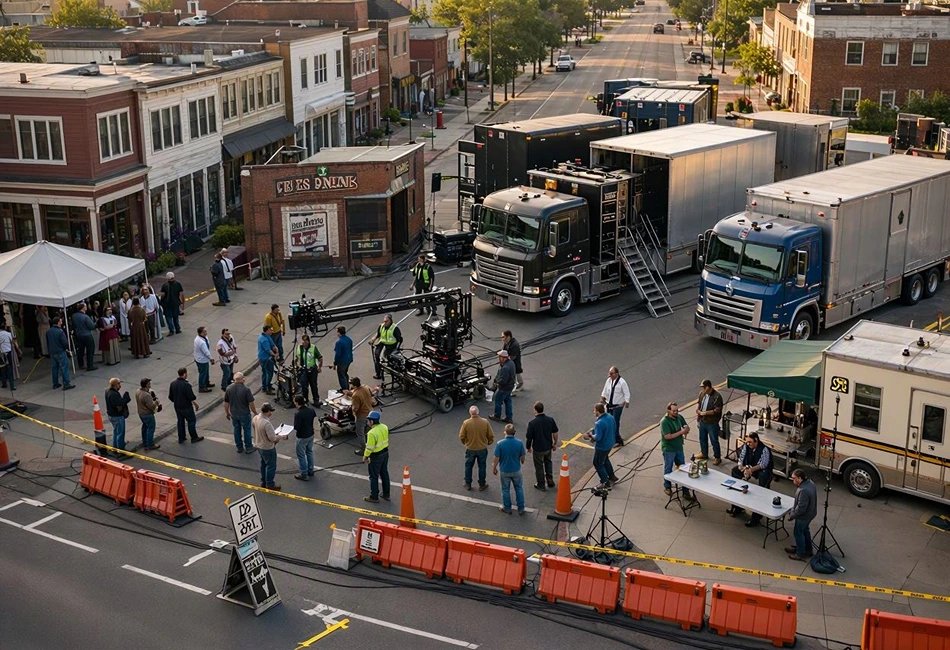
The new incentive will help keep onsite film productions in the U.S.
WHO IS BEHIND THE PUSH FOR A FEDERAL PRODUCTION INCENTIVE?
The campaign for a federal incentive runs through the U.S. Film and Television Production Coalition, an advocacy alliance launched this month at usfilmandtv.org.
Its membership covers most of the industry: the Motion Picture Association, IATSE, SAG-AFTRA, the Directors Guild, the Writers Guilds East and West, the Producers Guild, the Teamsters, LIUNA, the American Federation of Musicians, the Coalition for American Production, the Independent Film & Television Alliance, the Future Film Coalition, NCTA, the Association of Talent Agents and Hollywood Ambassador Jon Voight. The unions and guilds alone represent close to 400,000 professionals.
FilmUSA, the national association of film commissions, is a member, and the coalition’s site has an open enrollment form for organizations that want to join.
The coalition also hosts the MPA-commissioned economic study and a roster of member endorsements. Both are advocacy materials produced to support the legislation, and they should be read as such.
WHERE THE INCENTIVE LANDS
For the destination side of the business, the relevant case has never been the production budget; it is the economic impact that it leaves behind.
Rep. Nathaniel Moran of Texas, a House sponsor, framed it that way at introduction. When a production comes to a community, he said, the money does not just benefit the production company. It helps the local caterer, the hardware store, the hoteliers and every tradesman in between.
Rep. David Kustoff of Tennessee made the same point, noting that production work reaches past the set to crews, local contractors, restaurants, hotels and small businesses.
The Coalition for American Production puts the number at roughly 162,000 businesses nationwide supported by the industry, most of them small operations with 10 or fewer employees.
FilmUSA President Katie Pryor, whose member commissions have spent decades building that infrastructure, argues state programs were never designed for this fight. State incentives, she said, were not built to compete against nations.
It’s important to note that this bill is still in its introductory phase. The bill has bipartisan, bicameral sponsorship and presidential backing, which is more than previous attempts had, but it still must clear a tax-writing committee in an election year.
WHAT FILM COMMISSIONS SHOULD DO NOW
- Sign the petition for a federal film incentive.
- Find out whether your shooting locations sit inside a qualified opportunity zone, and whether they meet the rural test.
- Know your crew depth and stage capacity in numbers, not adjectives.
- Have the stacking math ready before a location scout asks what your market is worth at 25% or 30%.
WHAT’S NEXT?
If this bill does pass, the effect splits two ways. In the established hubs, the base credit is mostly a stabilizer, giving Atlanta, Los Angeles and New York a reason to keep work that has been drifting to Toronto, London and Budapest. In smaller markets, the uplifts are the opening. A 30% stacked rate on an independent production shooting in a rural zone changes what is possible in places that have never competed for that work.
Reading, as Schott describes it, already has the locations, the crew and the facilities within half an hour. A federal credit would change how many producers have a reason to shoot.
Get the latest film destination news and production insights with InSite from Destination Film.
