

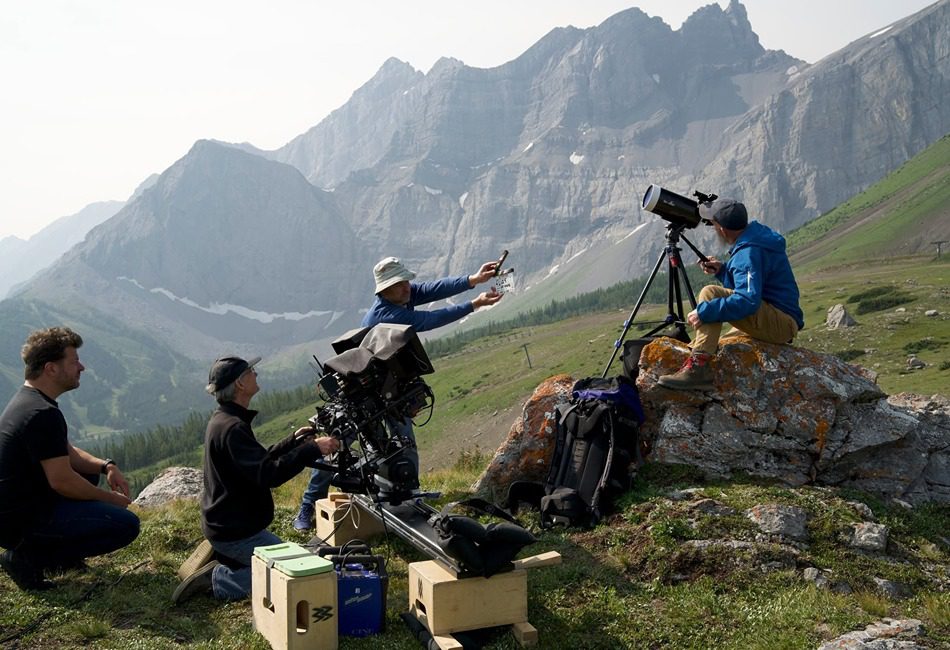
Destinations that have seen the economic payoff of screen exposure are now competing hard for your project with better incentives, infrastructure, and support
By Miles Dobis
As a producer, selecting a filming location used to be a simpler proposition. You would find the backdrop that matched your setting and creative vision, and then you would negotiate with local officials to establish incentives and filming parameters. But with an increasingly decentralized Hollywood, where many English-language productions are filmed outside of California and throughout the entire world, the calculus has become more complicated. With more options, it’s also important to understand how investing in new and developing locations can benefit your project directly and help the broader industry.
Proof Is in the Production Hubs
Newer production hubs such as Georgia, New Zealand, and Alberta, Canada, now have decades of proof that a critical mass of projects can create a self-sustaining loop where productions can film at a lower cost, and the local economy can benefit from a new business sector. And now other locations want to lure productions to their own destinations. This competition benefits production. It means better incentives, more responsive commissions, faster permitting, deeper crew pipelines, and infrastructure investment that makes a shoot easier and cheaper. The practical result for you as a producer or locations scout is more locations than ever to match your creative vision.
However, this process usually can’t begin without efforts from the local film commission. While location scouts may seek out an area because it visually matches their story, cities and states will often need to advocate for their value as a filming location. This is where the film commissions can directly advocate for tax incentives or studio space investments to attract big-budget productions, and hopefully succeed enough to repeat the process.
The Feedback Loop Destinations Have Figured Out
A strong example of film commissions capitalizing on a breakout hit is Alberta, Canada. The province had previous success in the Western genre by hosting productions like Brokeback Mountain and The Revenant, but its visibility hit the stratosphere after the success of The Last of Us. Based on the popular PlayStation franchise where apocalypse survivors are hunted by zombies, the series was the most expensive production in Canadian history. The first season generated $182 million dollars and created nearly 1,500 jobs, and tourists began visiting filming locations mere days after the debut episode.
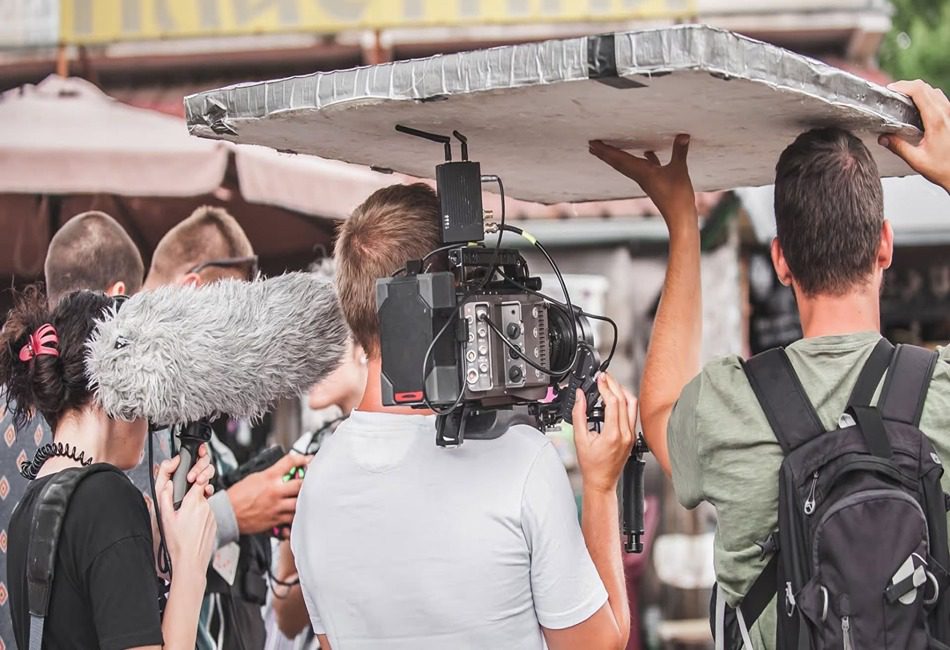
The local Alberta government saw the opportunity, and within days, Premier Danielle Smith announced that her government would “solidify Alberta’s status as a top destination for film and television productions through competitive tax credits, grants and industry training.” Travel Alberta published an interactive map of all 180 filming locations and actively marketed them to international travelers, and the increased tourism activity reinforced the political case for keeping production incentives competitive. The strategy was successful; The Last of Us returned to film in Alberta with an even larger budget.
Alberta’s playbook for establishing a sustained filming economy was accomplished 25 years earlier by the country of New Zealand. PeterJackson’s popularThe Lord of the Rings film trilogy used 150 distinct locations across the country and catalyzed an entire infrastructure response: purpose-built studio facilities, a formal government rebate program (the New Zealand Screen Production Rebate) and a skilled local crew base that now handles major productions routinely. By the time Amazon producedTheRings of Power series, New Zealand had generations of behind-the-scenes talent to make filming in the country an obvious choice.
The Commission Arms Race: What Better Competition Looks Like for Producers
What do these developments mean for you as a producer or location scout? It means that more locations than ever can offer you local talent and discounted filming opportunities. After the success of The Lord of the Rings, New Zealand increased its location incentive rebate from 12.5% to 15% as part of a broader expansion of its Large Budget Screen Production Grant, while Alberta’s production incentives range from 22–30% with the higher rates tied to use of local resources. And Georgia’s 30% transferable tax credit, built incrementally over years of documented production success, has made it one of the highest-volume production states in the United States. Stranger Things, The Walking Dead, the newest Scary Movie, and dozens of other major productions all use the Peach State as a filming base.
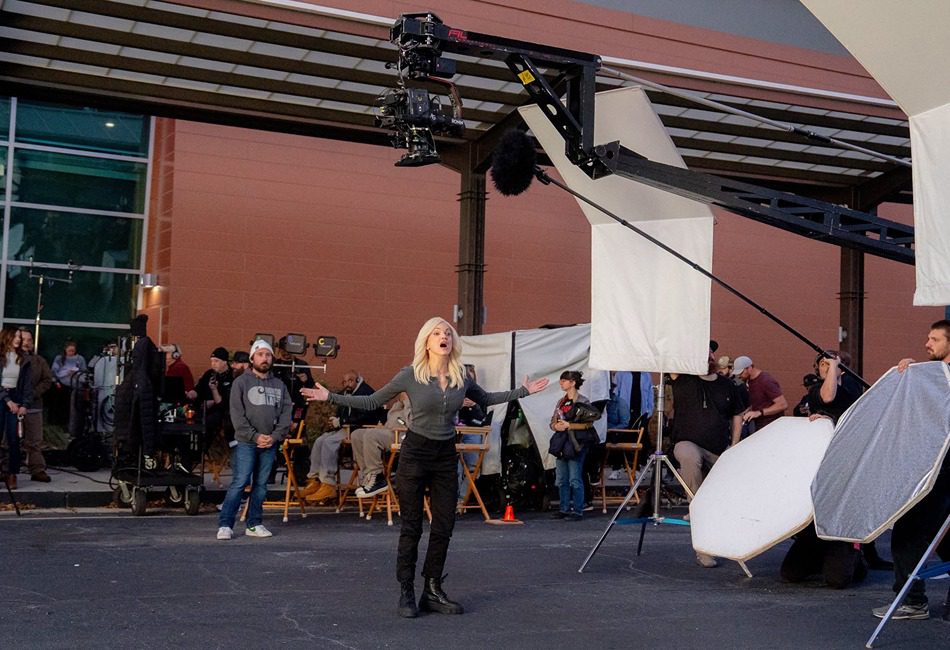
Meanwhile, Utah’s Film Commission expanded its Rural Utah Film Incentive after the success of the Yellowstone franchise to attract productions to parts of the state that previously hadn’t been considered as production hubs. When a Yellowstone spinoff (Y: Marshals) returned to Utah, a Paramount executive stated publicly that Utah was “our first choice” because it is “creator-friendly and affordable,” the language of a destination that has made the production-support investment pay off.
What This Means for Productions
All these investments directly benefit producers because, beyond financial incentives, the locations have become “camera-ready destinations.” Years of infrastructure development have created formalized systems for streamlining location access, pre-vetting locations for shoots, and reducing the turnaround time between a location scout’s inquiry and a production-ready response.
Georgia’s “Camera Ready Community” program, which started with 16 counties and rapidly expanded to over 70 applicants, is explicitly designed to reduce the friction between a studio choosing Georgia and a production being able to access it. If you need to oversee an advertisement with a tight deadline or shoot pickups before your film premiere, the convenience of Georgia’s efficient “Hollywood of the South” is a safer option than a less-established location or film commission.
You’ll also have access to a deep well of local talent, saving you significant expenses on food and lodging for out-of-state labor. This is because destinations that have invested most heavily are building crew pipelines as part of their production-support infrastructure. On The Rings of Power, more than 20 New Zealanders with limited prior experience were hired and trained up specifically by the production. This was a talent development investment made possible by a stable production that both benefits local artists and makes filming in the country more streamlined.
Destinations That Invested After the Cameras Left
How were these locations able to create such sustainable production hubs? Quite simply, they continued to invest after the cameras stopped rolling. After the success of The Last of Us, Alberta’s government moved to explicitly market the province’s competitive tax credits (22–30%), crew base, and location variety to international studios. Alberta has varied topography that ranges from small-town prairies to urban streetscapes, and the province pitched these varied backgrounds along with the more lucrative tax credits to future productions. The strategy worked; future productions in Canada will include the Netflix series The Murder of JonBenét Ramsey and a new Magnificent Seven show.
New Zealand was similarly aggressive after the success of The Lord of the Rings. The New Zealand Film Commission and government increased the NZSPR tax rebate, invested in studio space (Auckland Film Studios, Kumeu Film Studios) and nurtured a world-class VFX industry anchored by Weta (which oversees effects for the Avatar film franchise). Additionally, the Large Budget Screen Production Grant has made New Zealand a repeat destination for major international productions, including Disney’s live-action Mulan remake and the Blumhouse horror breakout M3GAN.
And while Georgia’s 30% transferable tax credit has made it industry shorthand for blockbuster filmmaking, its operational story is equally significant. The state built a formal system for making its counties production-ready, developed a searchable location database that scouts can access for quick turnarounds, and has consistently expanded its incentive program in response to documented production activity. The result is a state that now routinely competes for and wins productions that would historically have defaulted to California or New York. The economic track record (major franchises, consistent TV production, documented local spending) has given the Georgia Film Office the political support to maintain and expand those incentives.
Screen Tourism’s Increased Value
This is a lot of information to absorb, but the important takeaway is that your production has more options for location shooting than ever before, thanks to increased screen tourism and competition among film commissions. Screen tourism’s economic proof has given destinations a strong reason to compete for film productions in ways they didn’t have to decades ago. For producers and location scouts, that competition is an asset. The destinations that have done the institutional work to convert screen exposure into production infrastructure are, in most cases, significantly more valuable partners than they were even five years ago. That’s worth knowing when you’re building a production plan.
And while you may have more filming location options than ever, you and your crew should have questions prepared for these newly successful film commissions. A destination that has recently hosted a high-profile production and documented its impact may be actively improving what it offers. Film commissions in that mode are worth engaging directly and early, not just for the formal incentive program, but for the informal support that production-friendly commissions provide. This includes advanced location access, relationships with local authorities that speed up permit approvals, knowledge of available crew and willingness to problem-solve in real time. With all of this in mind, you’re certain to find the right collaborative film commission and perfect backdrop that makes your upcoming project unforgettable.
